
Company activities
Risks and Threats
Risk management system
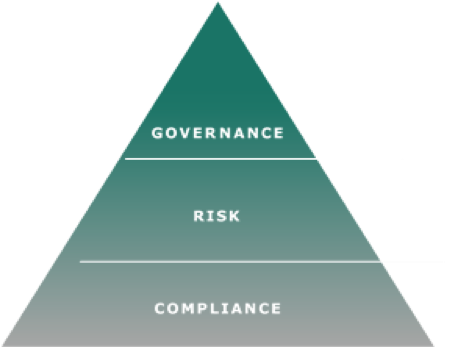
KOGENERACJA Group has implemented solutions in the scope of integrated risk management architecture – defined by a uniform standard for PGE Energia Ciepła Group. The primary goals of the process in the currently used model are to:
Risks to ordinary business are measured once a year in the perspective of year n+1. In this way, in a reasonably downside scenario, it is possible to identify and prepare an appropriate response to risks in the context of significant changes taking place in the Company’s key business functions. The entities which conduct business in the heat and electricity generation sector have an obligation to cater to the basic needs of citizens and ensure energy security of the country as well as energy transition leading to the achievement of climate protection goals. Mindful of the trust that clients have placed in the Company and the importance of energy and heat supply to ensure the proper functioning of local communities, all risks that could lead to disruption of planned production are taken into account in a conscious and responsible manner. Risk measurement is not only focused on the possible damage to assets or a failure to achieve profit, but also on threats associated with the possible loss of trust of the Company's customers and damage to its reputation as a reliable energy supplier.
Like other entities in the heating sector, KOGENERACJA Group is also exposed to risks resulting from the specific nature of its operational activities, functioning in a specific market and regulatory and legal environment, as well as risks resulting from the current macroeconomic and geopolitical situation.
At KOGENERACJA S.A., risk management is implemented based on the GRC (Governance – Risk – Compliance) model, i.e. the concept of 3 lines of defence (Business – Risk – Audit). It allows the process to be aligned and integrated at all levels of management, in individual areas of activity. Definition of functions, as part of corporate risk management, ensures independent assessment of individual risks and their impact on the Company, with significant risks mitigated and controlled. As a separate compliance function has been set up within the Group, this ensures that the business activity of KOGENERACJA S.A. is conducted in accordance with applicable legal requirements and internal standards.
Key risks along with their assessment until the end of 2025
 high risk; intolerable risk, requiring immediate and active response aimed at the simultaneous reduction of impact and likelihood
 medium risk; an appropriate response should be prepared, based on cost-benefit analysis
 low risk; does not pose a threat and can be tolerated
↗ increase
↔ stable trend
↙ decrease
| Risk area | Risk name | Risk level/ trend | Mitigating actions and risk management tools |
|---|---|---|---|
MARKET AND PRODUCT RISKS related to the prices and volumes of products and services offered | Production of electricity and heat – related to production planning and the negative impact of factors shaping production possibilities | ↗ | Key actions:
|
| Heat sales volume - related to the implementation of the heat sales plan, resulting from unfavourable external and internal conditions affecting the demand for energy goods | ↗ | ||
| Cogeneration support system – related to obtaining support for high-efficiency cogeneration and the impact of unfavourable external and internal conditions on achieving the expected revenues from support | ↗ | ||
| Emissions Trading System – related to the use of allowances and the fulfillment of obligations under the carbon emissions trading system | ↗ | ||
| Tariffs (regulated prices) – resulting from the statutory obligation to approve rates for heat prices | ↔ | ||
| Capacity Market – resulting from threats related to failure to meet the obligations resulting from the capacity obligation of Capacity Market Units | ↔ | ||
ASSET RISKS related to the development and maintenance of assets | Tangible investments – related to the strategic directions of the Company’s development and limited possibilities of obtaining financing for these projects | ↗ | Key actions:
|
| Asset management and maintenance investments – related to the risks resulting from maintaining the proper technical condition of production assets | ↗ | ||
| Failures - related to the operation and deterioration of energy equipment and facilities over time and unplanned unavailability of generating units caused by: disruptions, random events and failures | ↗ | ||
OPERATIONAL RISKS related to the implementation of current business processes | Fuel management - related to uncertainty about the costs, quality, timeliness and quantity of delivered fuels, production raw materials and the efficiency of the inventory management process | ↔ | Key actions:
|
| Purchasing – related to inefficiency and irregularities in the purchasing process | ↔ | ||
| Human resources – related to difficulties in providing staff with appropriate experience, competences and abilities to carry out specific tasks | ↗ | ||
| Industrial relations – related to the failure to reach an agreement between the Group's authorities and trade unions, which may lead to strikes/ collective disputes | ↔ | ||
| Cybersecurity – the risk of deliberate disruption of the proper functioning of production assets and IT systems | ↗ | ||
| Protection and security of facilities – related to maintaining a high level of protection of the Company's devices and facilities | ↗ | ||
LEGAL AND REGULATORY RISKS related to meeting the requirements of the legal environment | Environmental protection – obligations resulting from the regulations specifying environmental requirements to be met by energy installations and the rules for using the natural environment, including uncertainty as to their final shape and level of limits and ESG reporting | ↔ | Key actions:
|
| Employee safety – related to failure to provide safe working conditions | ↔ | ||
| Personal data protection – related to the breach of personal data security and the violation of the rights and freedoms of natural persons | ↔ | ||
| Concessions – resulting from the statutory obligation to hold a license for the conducted activity | ↔ | ||
FINANCIAL RISKS connected | Financial liquidity – connected with the possibility of losing the ability to service current liabilities and obtaining sources of financing for business activities | ↗ | Key actions:
|
CO₂ Emissions Trading Scheme
On 7 July 2021. Within the so-called fourth settlement period covering the years 2021-2030, the Minister responsible for climate issues announced a list of installations with the final number of CO₂ emission allowances allocated for heat production for the years 2021-2025 (in accordance with the Act of 12 June 2015 on the greenhouse gas emission trading scheme). These allowances only apply to heat production, no allowances are allocated to electricity generators from 2020 onwards.
For 2024, the Company was granted a limit, including free CO2 emission allowances for heat production, in the amount of 105 422 Mg (109 630 Mg in 2023, 113 029 Mg in 2022, 114 744 Mg in 2021, 159 365 Mg in 2020, 374 649 Mg in 2019, 477 859 Mg in 2018).
| Mg | For the year ended 31 December 2024 KOGENERACJA S.A. |
|---|---|
| Actual emissions in 2024* | 1 237 021 |
| Annual allowance allocation | 105 422 |
| Balance of 2024 after final settlement (shortfall) | 1 131 599 |
| Transactions for 2024 | 1 176 678 |
| Surplus | 45 079 |
For 2024, EC Zielona Góra was granted a limit, including free CO2 emission allowances for heat production, in the amount of 16 818 Mg (17 475 Mg in 2023, 17 948 Mg in 2022, 18 331 Mg in 2021, 32 538 Mg in 2020, 39 880 Mg in 2019, 47 491 Mg in 2018).
| Mg | For the year ended 31 December 2024 EC Zielona Góra S.A. |
|---|---|
| Actual emissions in 2024* | 554 376 |
| Annual allowance allocation | 16 818 |
| Balance of 2024 after final settlement (shortfall) | 537 558 |
| Transactions for 2024 | 521 677 |
| Shortfall | -15 881 |
In accordance with the applicable accounting policy, the Group posted provisions for a shortage of CO2 allowances in a total amount of PLN 170 872 thousand (in 2023: PLN 170 832 thousand); the value of provisions posted by the Parent Company is PLN 103 711 thousand (in 2023: PLN 135 794 thousand in 2023); and the subsidiary posted PLN 67 161 thousand (in 2023: PLN 35 038 thousand).
In December 2024, the Group redeemed CO2 allowances for 2024 in the total amount of PLN 510,420 thousand, including the Parent Entity in the amount of PLN 380 308 thousand and the subsidiary in the amount of PLN 130 112 thousand.